ITM University Gwalior is ranked among the best as Platinum Category Engineering Institute in India by AICTE, Ministry of HRD, Govt. of India in 2017.
T: 1800 270 0031
Email: admissions@itmuniversity.ac.in
ITM University
NH-44,BypassTurari, Jhansi Road Gwl (M.P.) 475001,(INDIA)
At ITM University Gwalior, Sahasradhara represents the belief that knowledge grows when diverse ideas meet. Just as countless streams converge to form a powerful river, the series brings together scholars from different disciplines to share insights, explore connections, and generate new perspectives.
Through dialogue, reflection, and intellectual exchange, Sahasradhara encourages faculty and students to move beyond disciplinary boundaries and discover new directions for research, innovation, and societal impact.
Every session becomes a space where ideas intersect, collaborations emerge, and new streams of knowledge begin to flow.
Schedule: Every fourth Friday of the month
Faculty & students explore emerging ideas, research perspectives, and interdisciplinary collaborations.
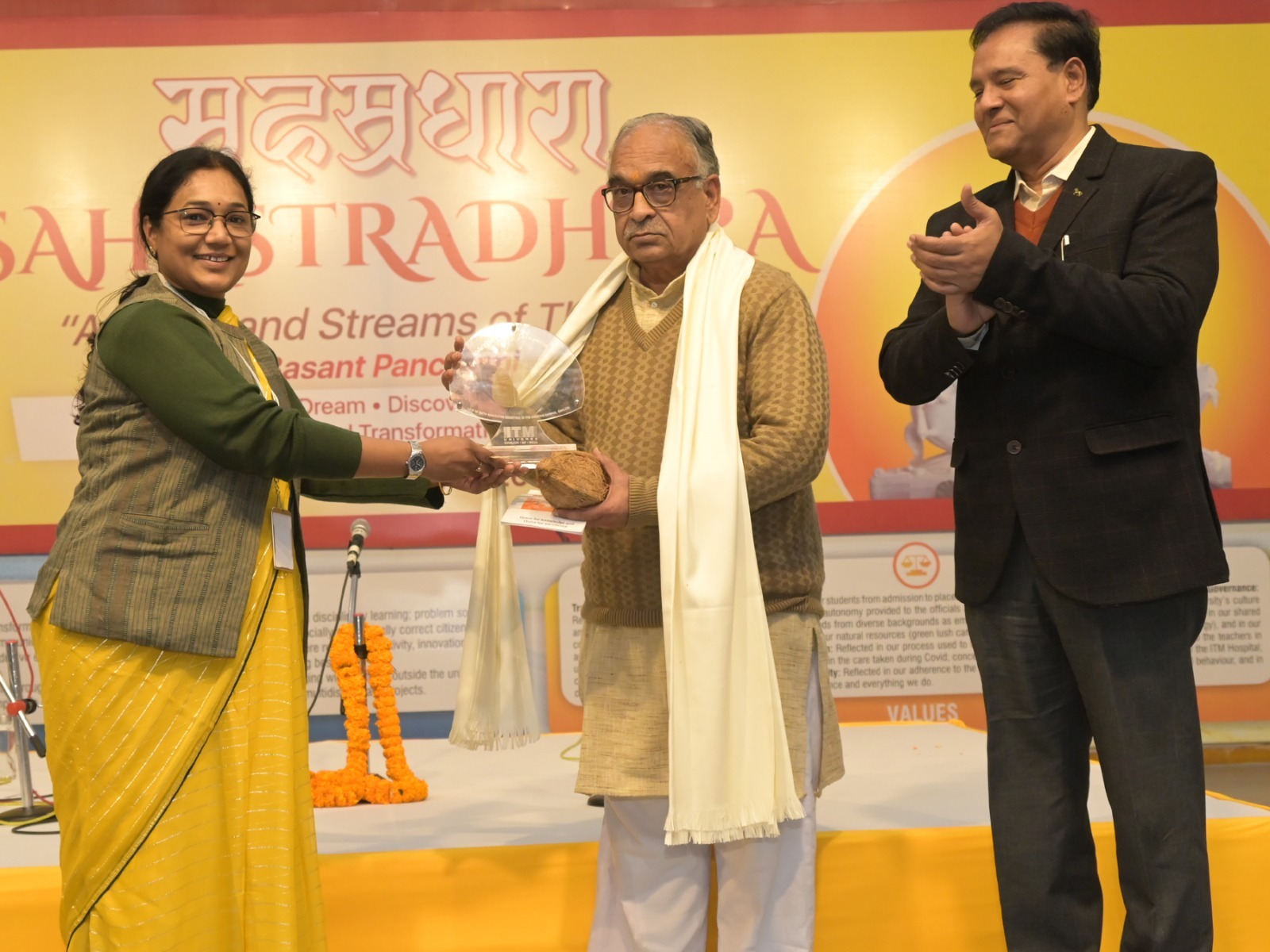
The inaugural Sahasradhara session was organized on the auspicious occasion of Basant Panchami, symbolizing knowledge, creativity, and wisdom.
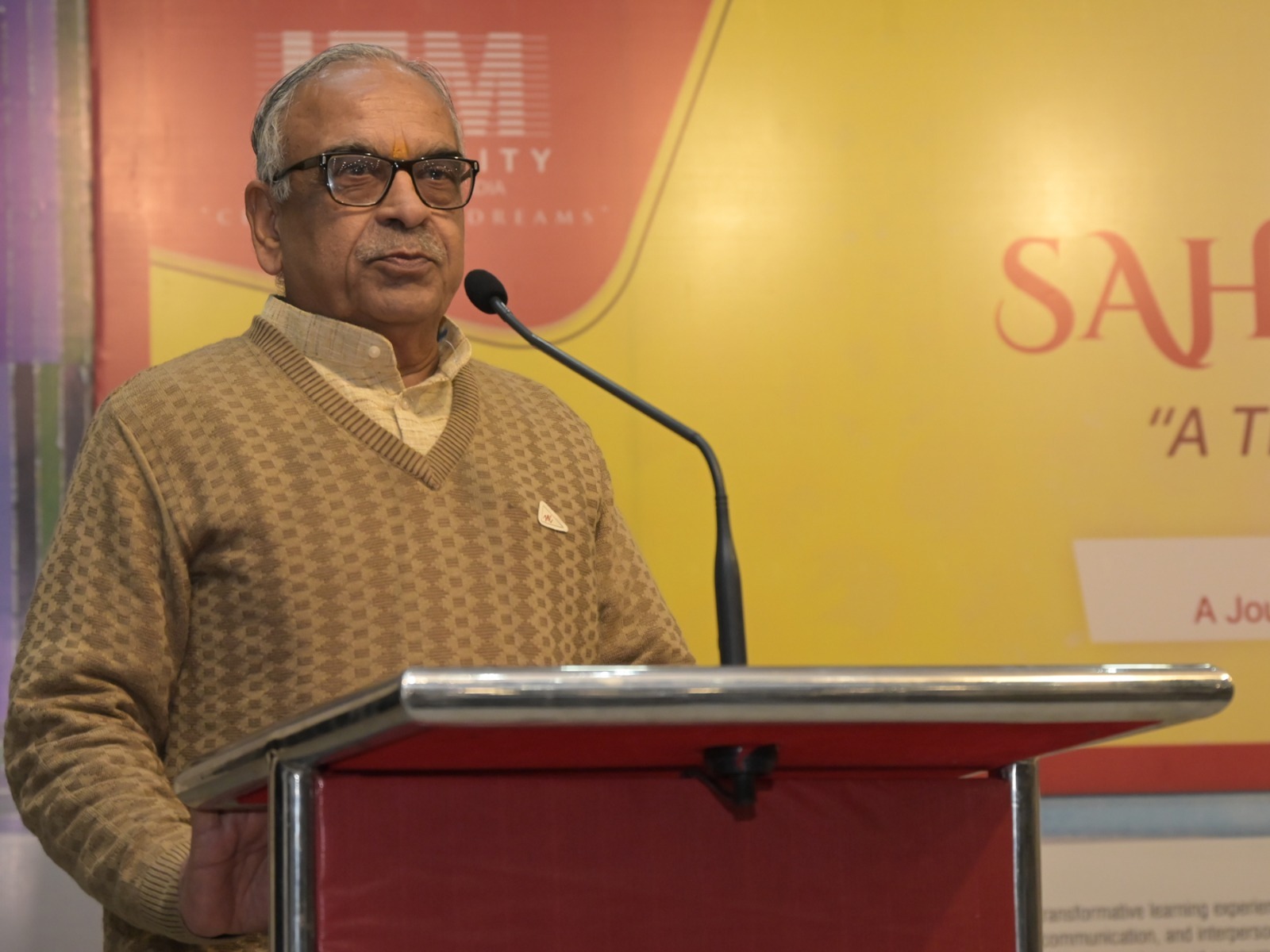
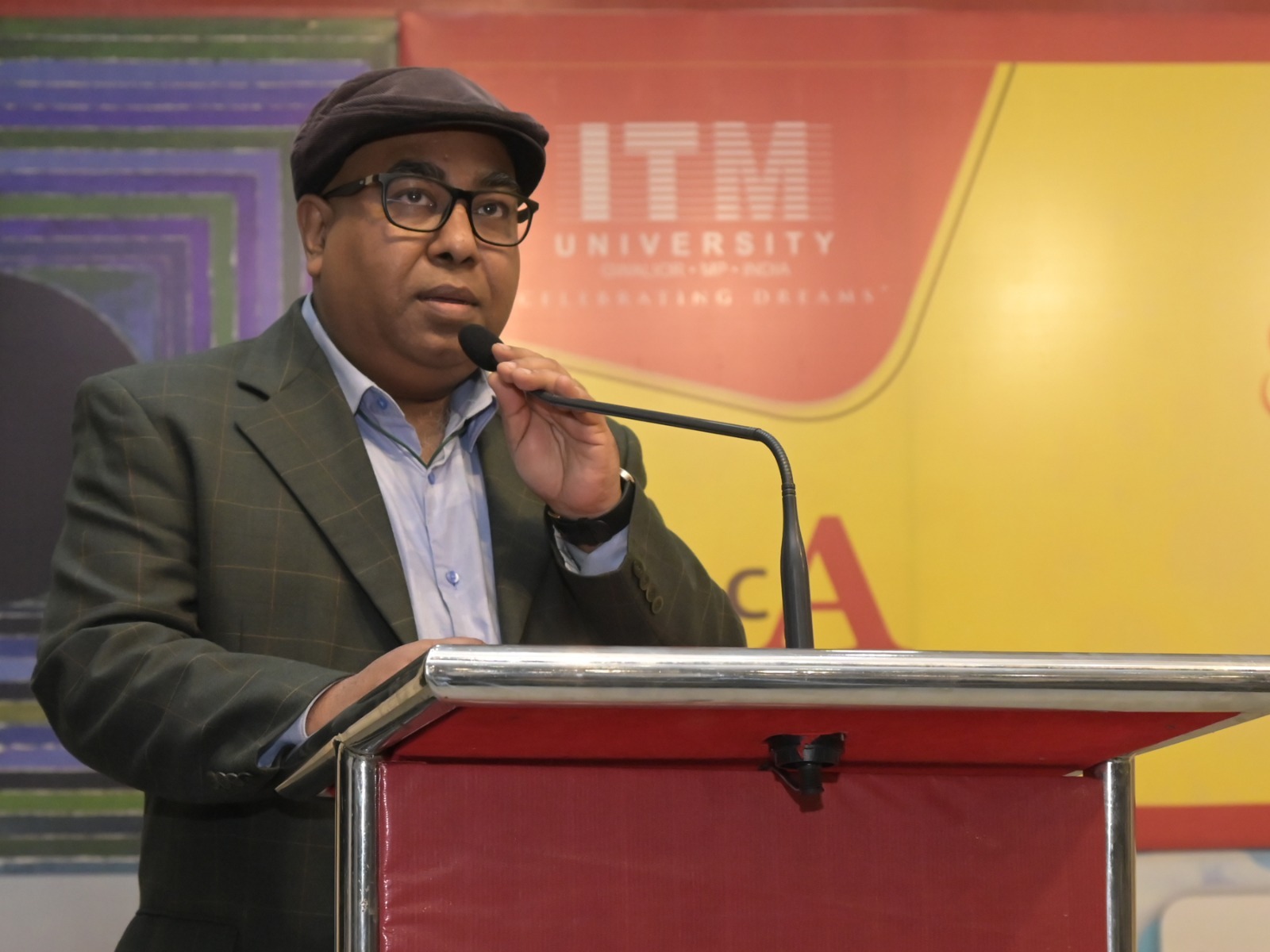
The event was graced by Dr. Rajendra Bandil, Chairman, Madhya Bharat Shiksha Samiti, Gwalior, as the keynote speaker.
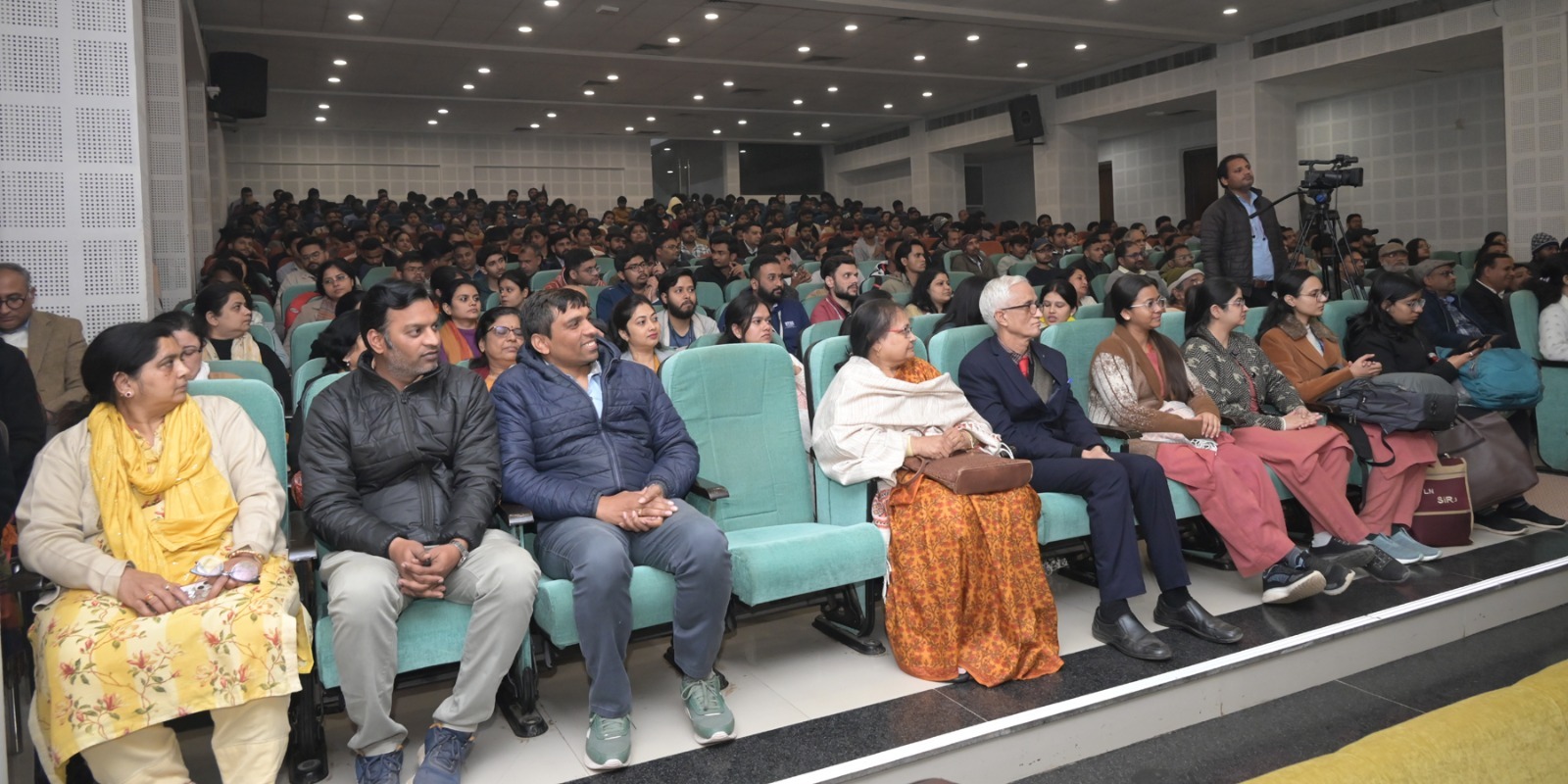
The programme brought together faculty members, academic leaders, and students for an engaging exchange of ideas on the evolving role of universities in fostering innovation and societal development.
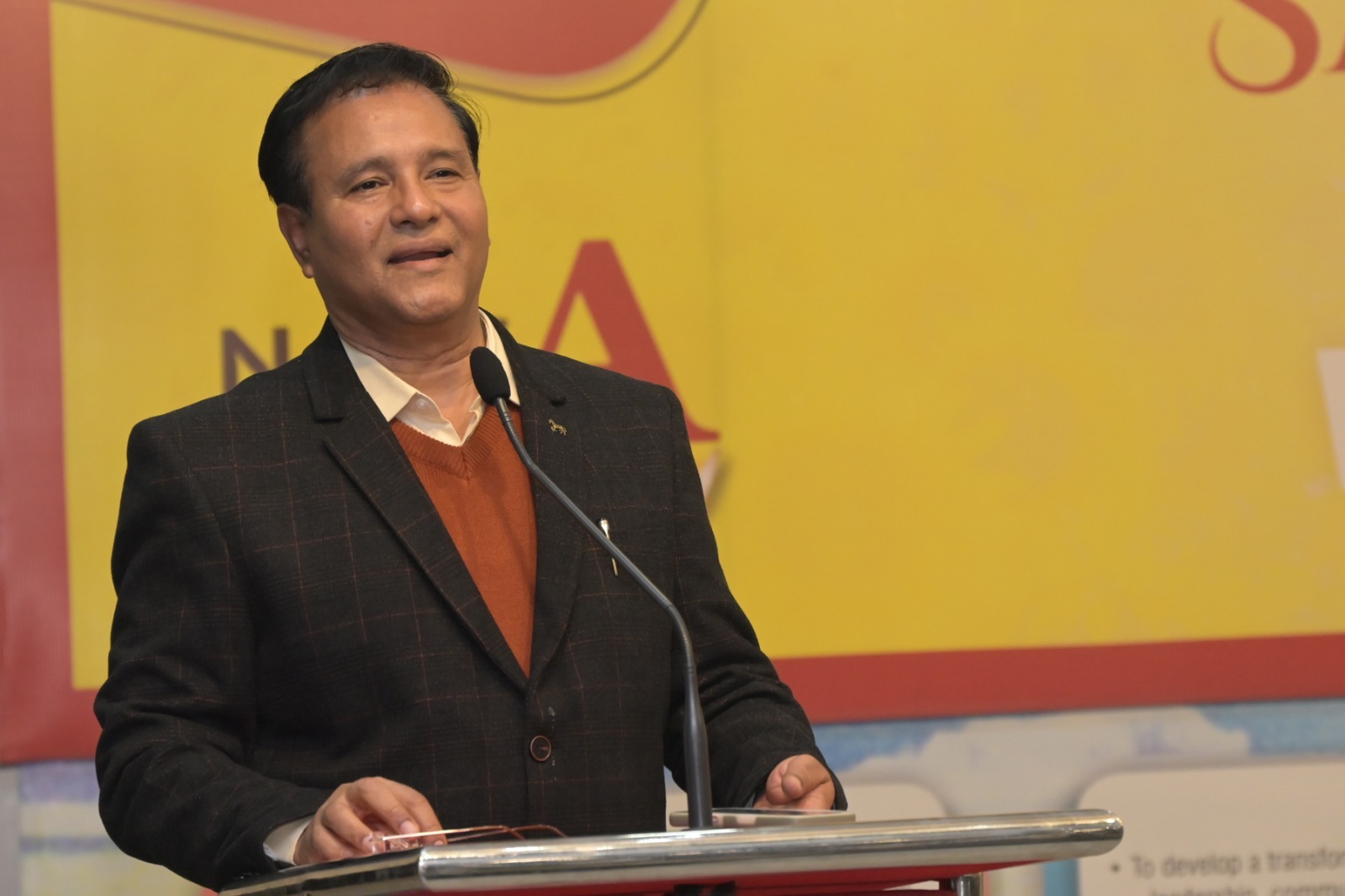
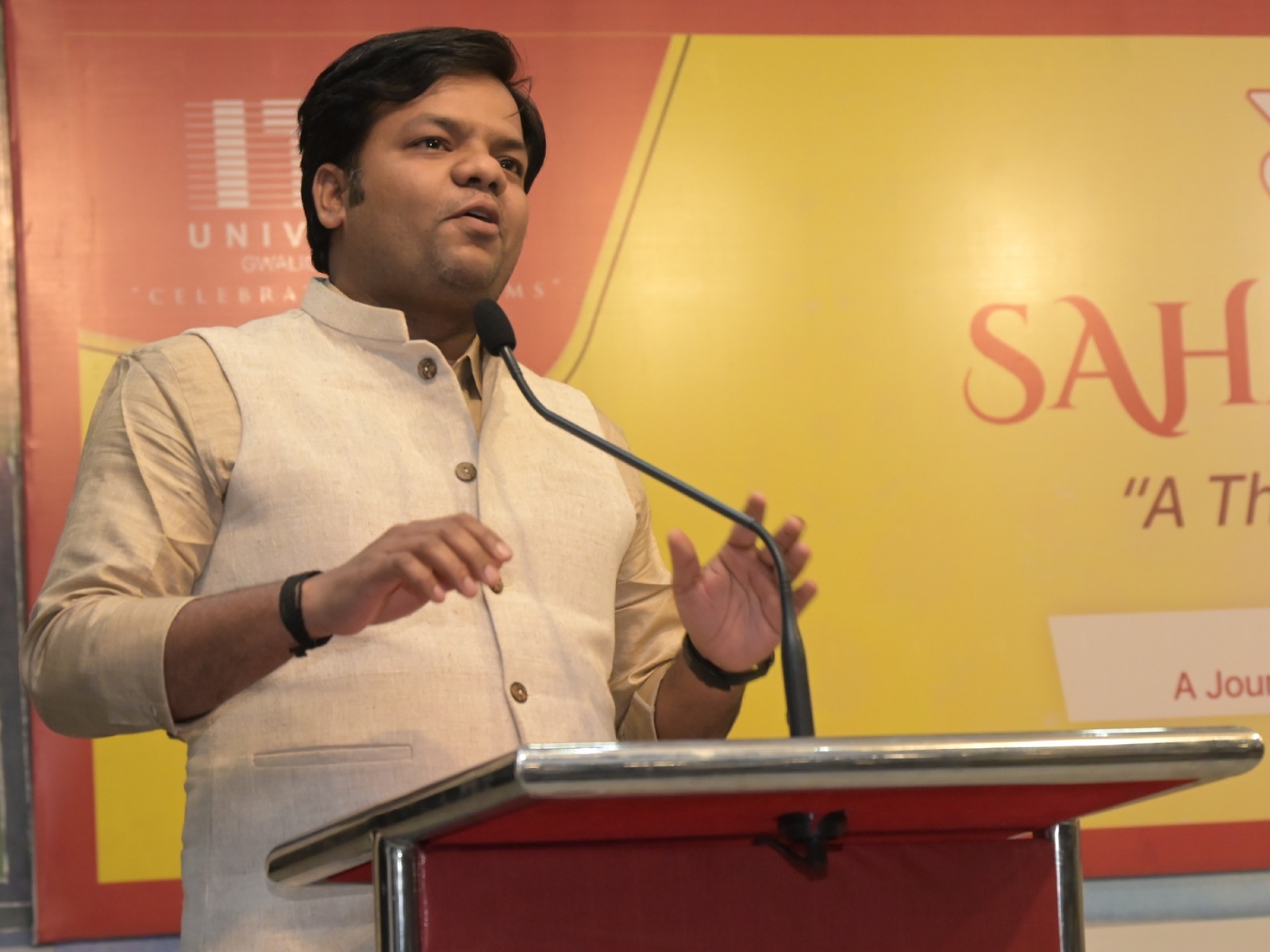
Prof. (Dr.) Yogesh Upadhyay, Vice Chancellor, ITM University Gwalior, emphasized the importance of interdisciplinary dialogue in higher education and highlighted the role of platforms like Sahasradhara in encouraging collaborative academic thinking.
Dr. Sanjay Joethe shared insights on strengthening research culture within universities and emphasized the importance of faculty-driven initiatives that encourage knowledge exchange and academic collaboration.
Dr. Manish Jaisal highlighted the importance of connecting academic research with societal needs and encouraged faculty members to explore interdisciplinary research opportunities through platforms such as Sahasradhara.
Knowledge for Transformation: Connecting Research with Society
This theme encourages faculty members to link their research with broader societal challenges and opportunities related to innovation, sustainability, health, technology, and human development.Sahasradhara encourages faculty members to present research ideas in ways that connect with scholars from diverse fields. Dialogue across domains such as engineering, management, health sciences, agriculture, artificial intelligence, and social sciences often reveals new perspectives and unexplored research possibilities.
These discussions frequently lead to the identification of new research questions and collaborative academic initiatives that extend beyond individual disciplines.
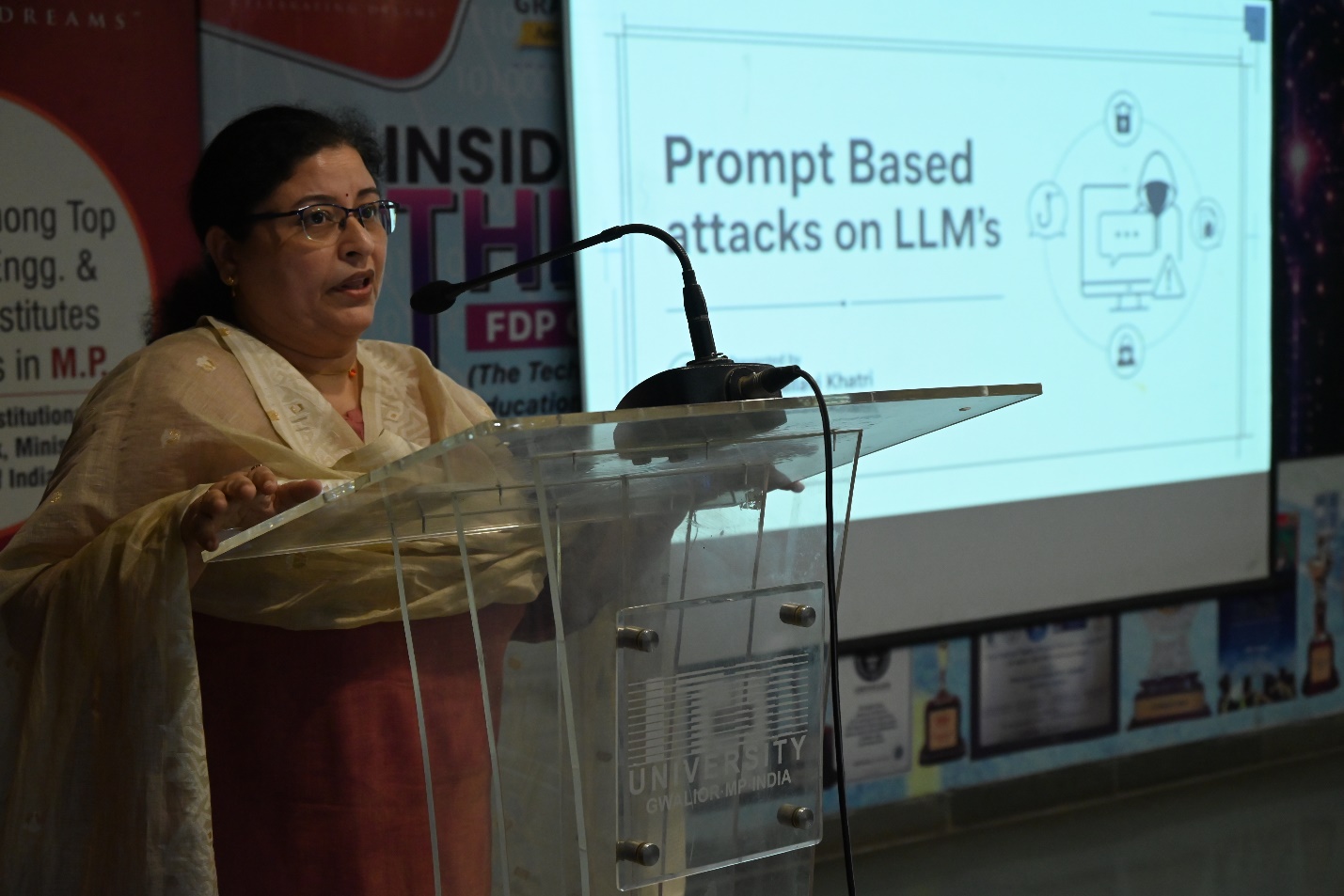
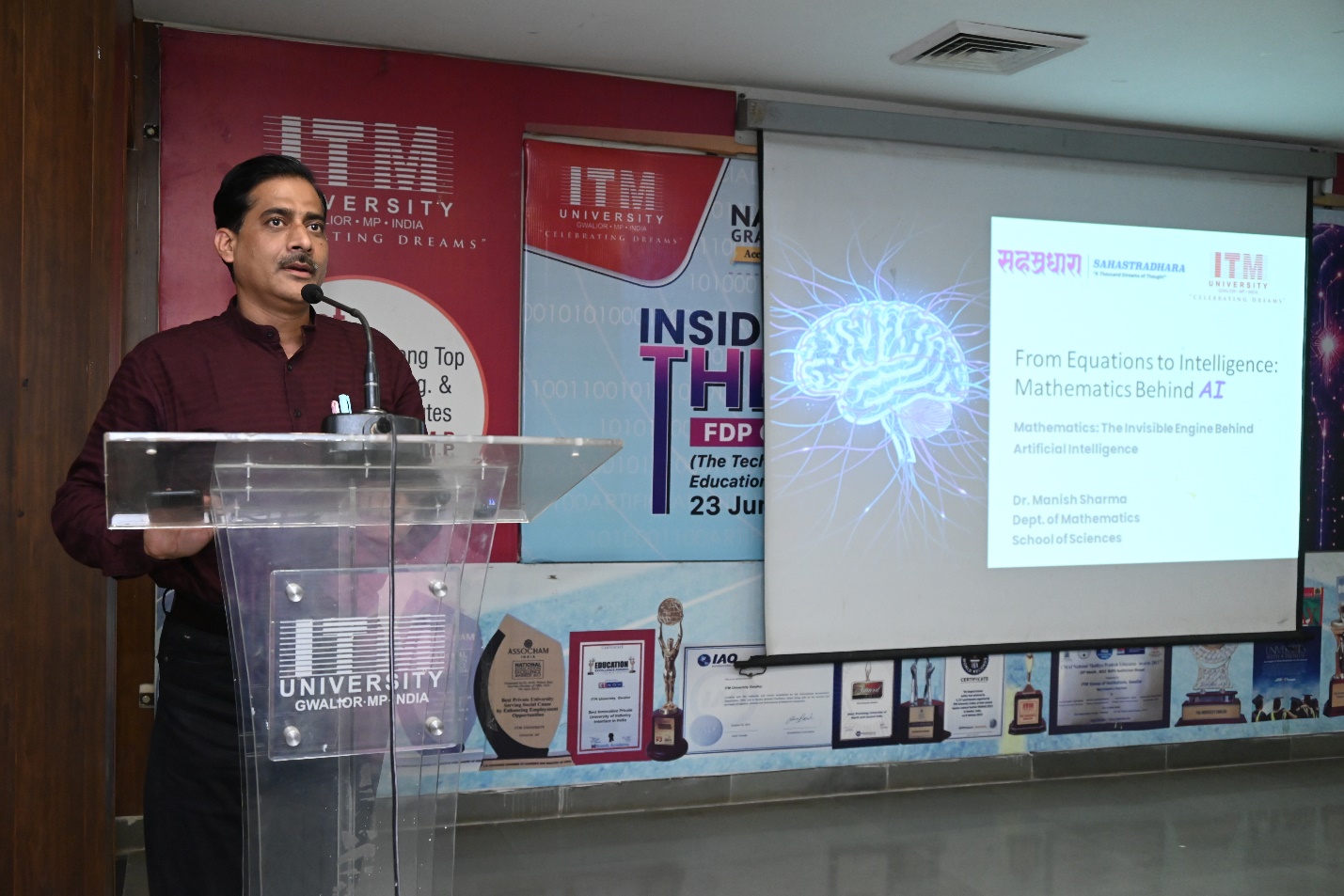
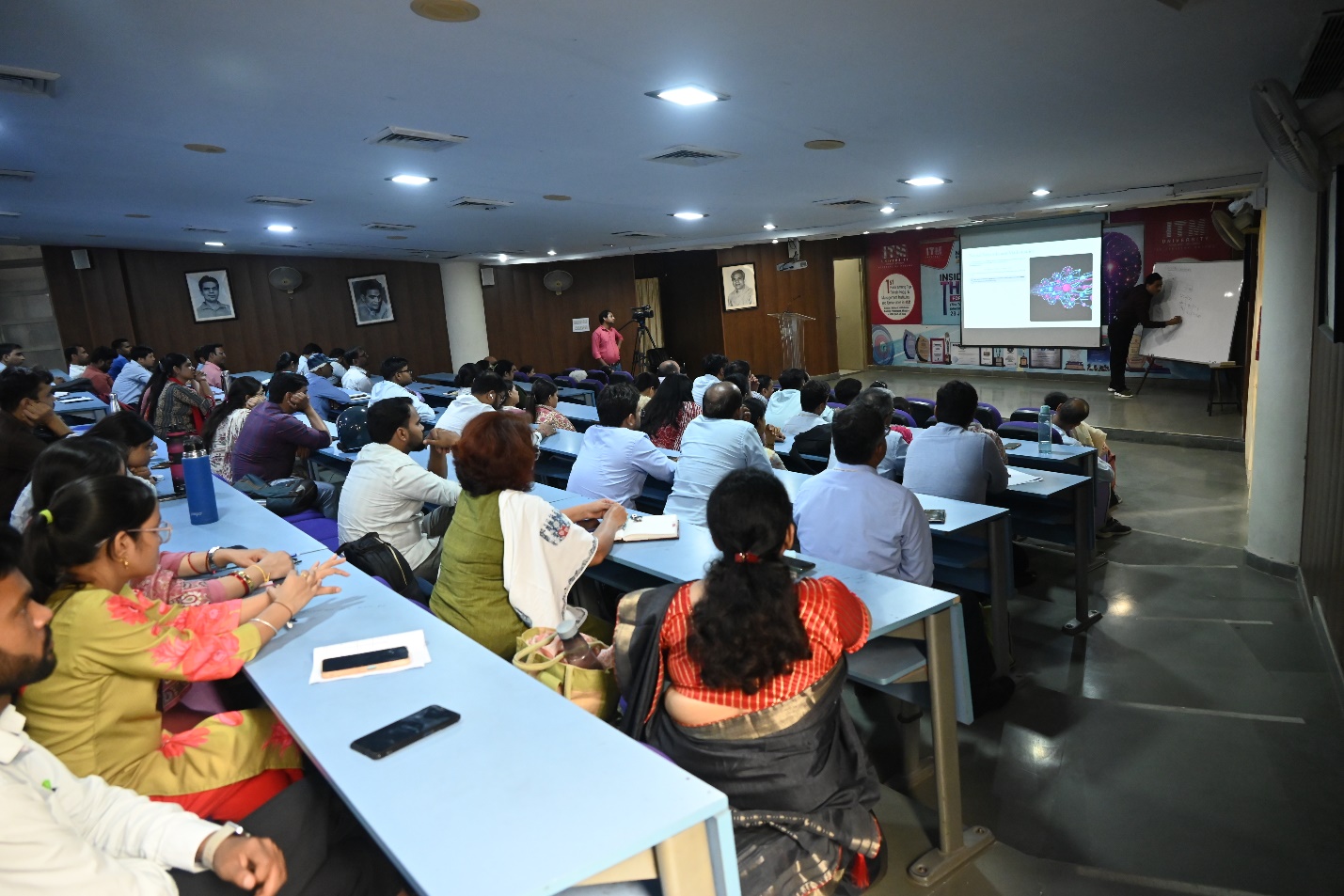
ITM University Gwalior successfully organized a Faculty Development Programme under the Sahastradhara Lecture Series on 23 June 2026 on the theme “Inside the Mind of AI: Demystifying AI.” The session featured insightful talks by Mr. Ashish Chandel on innovation and the role of mistakes in the age of AI, Dr. Pallavi Khatri on Prompt-Based Attacks on LLMs, and Dr. Manish Sharma on the mathematical foundations of Artificial Intelligence. Hon'ble Vice Chancellor Prof. Yogesh Upadhyay concluded the session by emphasizing the evolution of AI from “Zero to GPT,” the growing importance of domain-specific LLMs, and the need for educators to prepare for an AI-driven future. The programme was coordinated by Dr. Rakhi Chauhan, School of Management. During the concluding session, participants were also informed that the next edition of the Sahastradhara Lecture Series (Session–III) is scheduled for 24 July 2026.
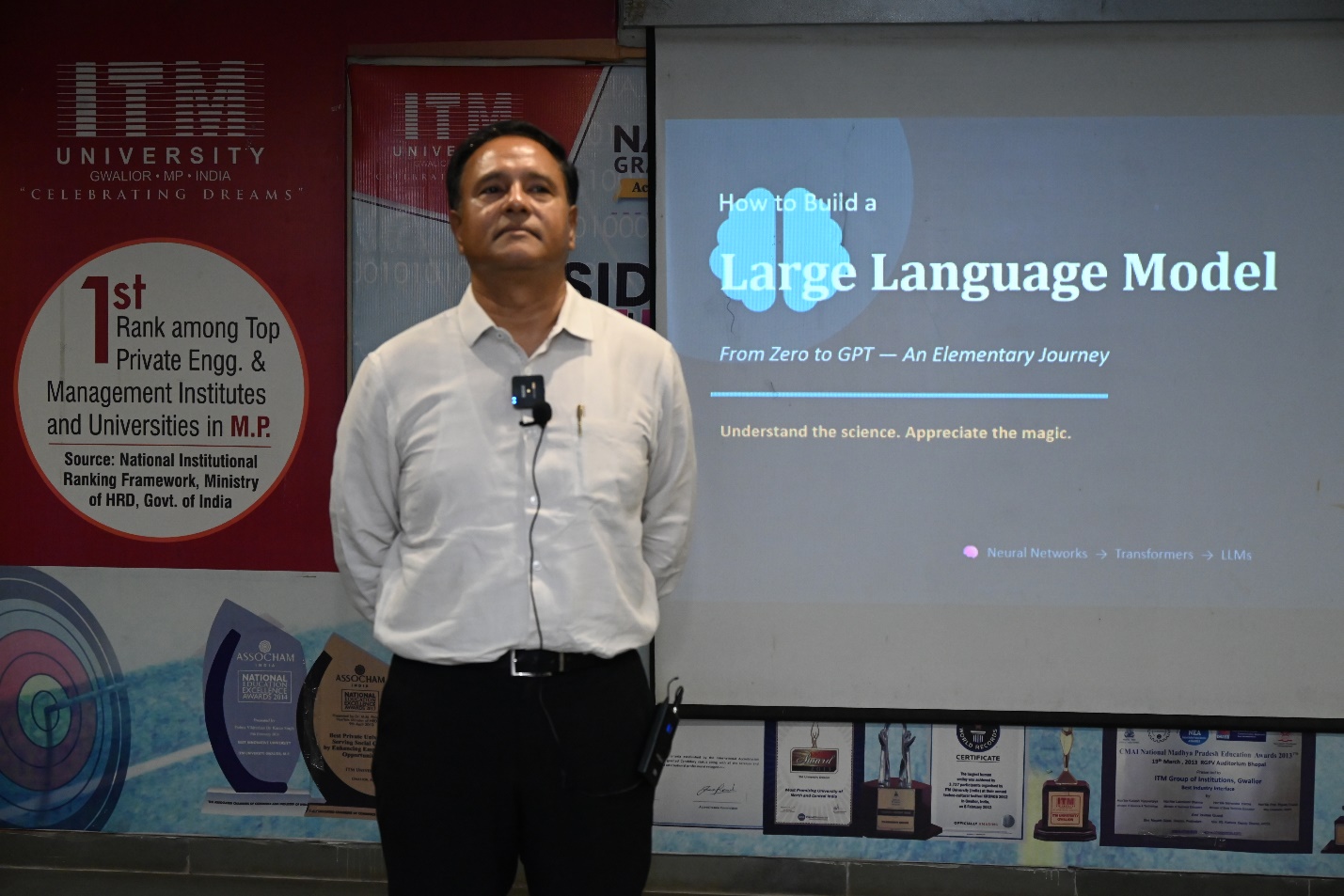
Prof. Upadhyay Sir emphasized that the journey from "Zero to GPT" reflects the remarkable evolution of AI technologies and underlined the growing importance of developing domain-specific Large Language Models tailored to diverse sectors and disciplines. He remarked that Artificial Intelligence is not a temporary phenomenon and that the "AI balloon" is not going to burst; rather, AI will continue to evolve and transform society. Therefore, educators, researchers, and institutions must prepare themselves to effectively engage with this technological shift.
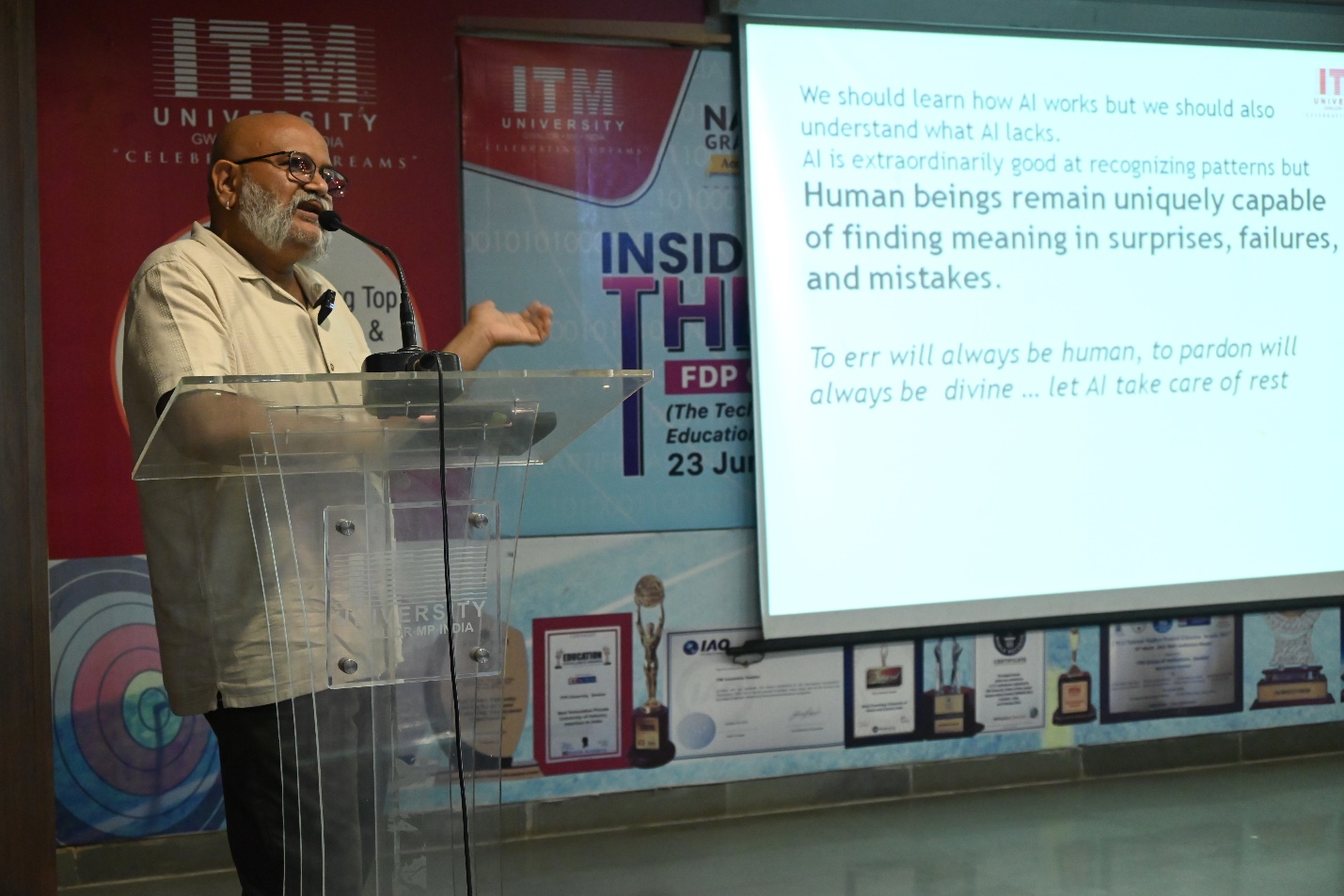
Mr. Chandel delivered a talk on the theme, "If Mistakes are Essential to Innovation, What Happens When We Build Systems that are Designed Not to Make Them?" Through engaging examples, he highlighted the role of experimentation, failure, and unexpected outcomes in driving innovation.
Prof. Khatri delivered a presentation on "Prompt-Based Attacks on LLMs." She discussed various security concerns associated with Large Language Models, including prompt injection, jailbreak attacks, data poisoning, and the need for secure and responsible deployment of AI systems.
He explained how mathematical concepts such as linear algebra, probability, statistics, calculus, and optimization form the foundation of modern AI systems. The session helped participants appreciate the scientific and mathematical principles that power machine learning models, neural networks, and large language models.