AI@ITM University, Gwalior: Advancing from AI Usage to Deep AI Understanding

Redefining Artificial Intelligence Education in India

At ITM University, Gwalior, Artificial Intelligence (AI) is not approached as a mere technological trend—it is treated as a transformational academic discipline that reshapes how students think, learn, and innovate.

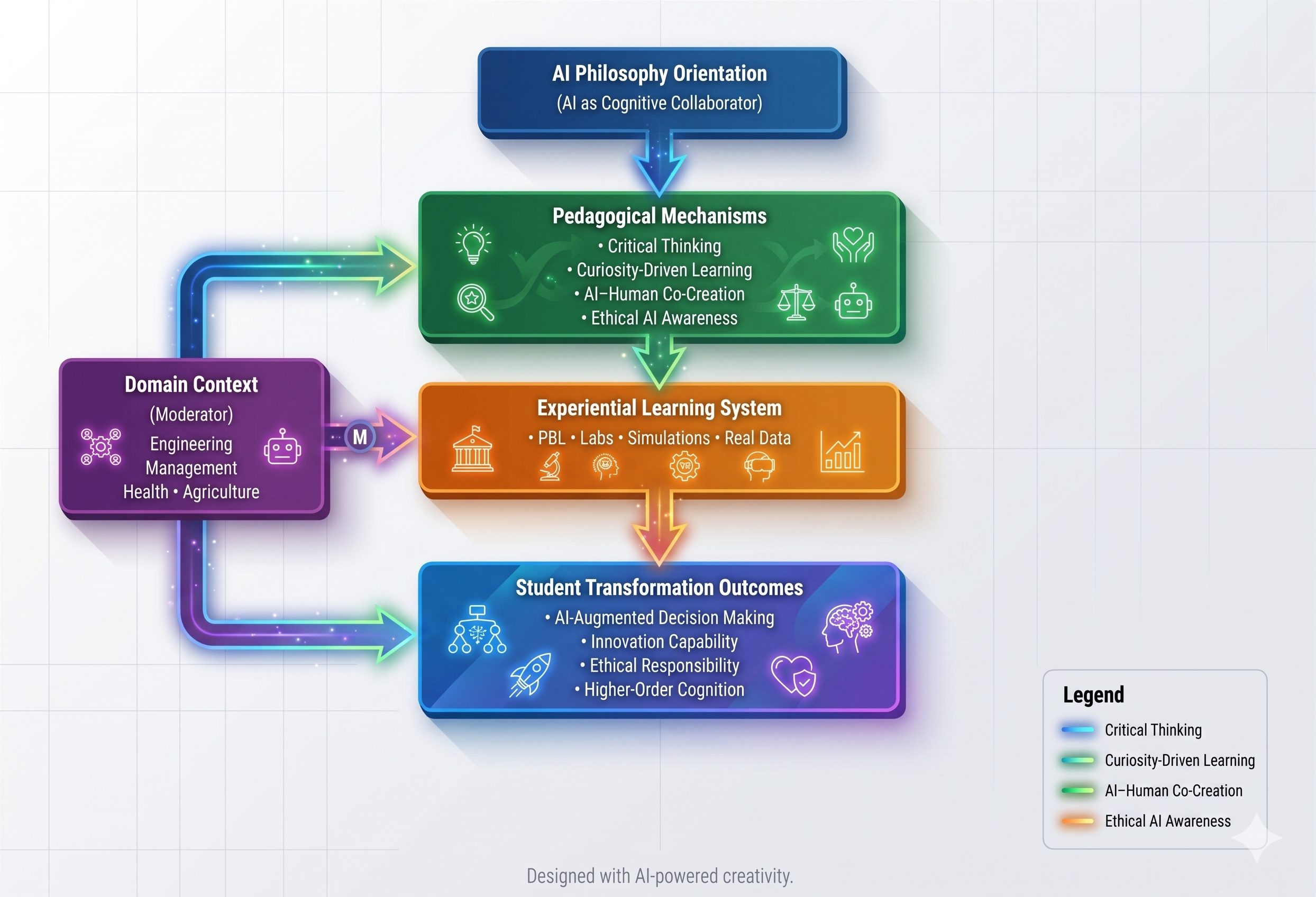
In an era where AI tools are widely accessible, the real differentiator lies not in using AI, but in understanding its logic, questioning its outputs, and applying it responsibly. ITM University stands among forward-thinking institutions in India by focusing on AI maturity, ensuring students evolve from passive users into thoughtful creators, ethical practitioners, and future-ready leaders.

Our objective is not to produce passive users of AI, but to develop critical thinkers, curious learners, and innovative creators who can engage with AI meaningfully and ethically.

Our Core Philosophy: Building AI Maturity, Not Dependency

While many educational models emphasize AI for speed and efficiency, ITM University takes a fundamentally different path—one that prioritizes intellectual depth over convenience.

We believe that:

  • AI should function as a cognitive collaborator, not a shortcut to answers
  • Learning must involve critical analysis of AI-generated content, not blind acceptance
  • Students should develop the ability to challenge, refine, and improve AI outputs
  • True education lies in balancing human intelligence with machine capabilities

This philosophy ensures that graduates are not dependent on AI—but are empowered by it.

AI as a Catalyst for Critical Thinking, Not a Substitute

At ITM, AI is carefully integrated into pedagogy to amplify human thinking abilities rather than replace them.

How AI Enhances Learning:

  • Encourages higher-order thinking skills such as analysis, evaluation, and synthesis
  • Promotes curiosity-driven learning, where students ask better and deeper questions
  • Supports idea generation and brainstorming, followed by independent refinement
  • Strengthens decision-making skills by evaluating the accuracy and relevance of AI outputs

Students are consistently trained to treat AI as a starting framework for exploration, ensuring that final outputs reflect their own reasoning, creativity, and understanding.

Ethical AI: Embedded Across the Academic Experience

Ethics is not taught as a separate subject—it is deeply embedded within every interaction with AI at ITM University.

Key Dimensions of Ethical AI Education:

  • Understanding algorithmic bias, misinformation, and AI limitations
  • Practicing responsible AI usage in academic and professional contexts
  • Ensuring academic integrity in AI-assisted work
  • Exploring the societal, economic, and global implications of AI technologies

This approach develops graduates who are not only technically skilled but also socially aware and ethically grounded, ready to navigate complex real-world challenges.

Interdisciplinary AI Integration Across Academic Programs

Interdisciplinary AI Integration Across Academic Programs

1. Engineering & Technology

Core Capabilities:
  • Generative Design Systems:AI explores multiple design permutations under constraints (cost, weight, durability), enabling optimized engineering solutions.
  • Predictive Maintenance: Machine learning models analyze sensor and operational data to predict equipment failures before occurrence.
  • Autonomous Systems & Control: AI enables self-regulating systems in robotics, manufacturing lines, drones, and smart infrastructure.
  • Digital Twins & Simulation: Creation of real-time virtual replicas of physical systems for monitoring, testing, and lifecycle optimization.
  • AI-Augmented Software Development: Automated code generation, debugging, testing, and performance optimization using AI tools.
  • Edge AI & Embedded Intelligence: Deployment of AI models directly on devices (IoT, embedded systems) for real-time decision-making.
ITM University Integration
Student Work
  • AI-based simulation models (Digital Twins)
  • Predictive maintenance projects using sensor datasets
Courses Offered
  • Machine Learning
  • Deep Learning
  • Computer Vision
Lab Infrastructure
  • GPU-enabled AI Lab
  • High-performance training environment
Pedagogy
  • Project-Based Learning (PBL)
  • Real-world datasets + engineering problems
Outcome

Students transition from theoretical coding to system-level AI engineering, preparing them for real-world industry challenges.

2. Management

Core Capabilities:
  • Predictive Analytics: Forecasting demand, pricing, customer behavior, and financial trends using historical and real-time data.
  • Prescriptive Systems: Suggesting optimal strategies and decisions under constraints using optimization algorithms.
  • Behavioral Analytics: Understanding customer sentiment, preferences, and patterns using NLP and AI-driven insights.
  • Operational Optimization: AI-driven logistics, supply chain optimization, inventory management, and process efficiency.
  • Operational Optimization: AI-driven logistics, supply chain optimization, inventory management, and process efficiency.
ITM University Integration
  • Students are trained to:
    • Critically evaluate AI outputs (not blindly accept them)
    • Use AI for:
      • Market analysis
      • Financial forecasting
      • Strategy simulation
  • Case-based pedagogy:
    • AI vs Human decision comparison exercises
Outcome

Managers trained as AI-augmented decision-makers, not AI-dependent users

3. Sciences

Core Capabilities:
  • High-Dimensional Data Analysis: AI processes large and complex datasets (genomics, physics, chemistry) to identify hidden patterns.
  • High-Dimensional Data Analysis: AI processes large and complex datasets (genomics, physics, chemistry) to identify hidden patterns.
  • Computational Modeling & Simulation: AI-enabled simulation of molecular structures, climate systems, and physical processes.
  • Automated Experimentation (Self-Driving Labs): AI-controlled experimental setups that design, execute, and refine experiments autonomously.
  • Pattern Recognition in Complex Systems: Identification of non-linear relationships in scientific phenomena.
ITM University Integration
  • Students use AI for:
    • Data modeling (Physics, Chemistry, Biology datasets)
    • Hypothesis testing using computational tools
  • Labs emphasize:
    • Data interpretation over mere computation
Outcome

Students move from observation → computational scientific reasoning

4. Agriculture

Core Capabilities:
  • Precision Farming Systems: Integration of AI with satellite imagery, drones, and IoT sensors for real-time crop monitoring.
  • Crop Yield Prediction: Machine learning models forecasting yield based on weather, soil, and historical data.
  • Disease & Pest Detection: Computer vision models identifying crop diseases at early stages.
  • Resource Optimization: AI-driven optimization of irrigation, fertilizers, and pesticide usage.
  • Agri-Supply Chain Intelligence: Forecasting demand, reducing wastage, and optimizing farm-to-market logistics.
  • Agri-Supply Chain Intelligence: Forecasting demand, reducing wastage, and optimizing farm-to-market logistics.
ITM University Integration
  • Integration with University Research Farms (CRC 1, 2, 3):
    • AI-based crop monitoring experiments
    • Data collection on soil, yield, irrigation
  • Students exposed to:
    • Ground realities + AI tools (not AI in isolation)
  • Courses:
    • Smart Agriculture
    • Agri Data Analytics
Outcome

Students develop context-aware AI applications, not abstract models

5. Health Sciences / Pharmacy

Core Capabilities:
  • Clinical Decision Support Systems (CDSS): AI assisting doctors in diagnosis and treatment recommendations.
  • Medical Imaging & Diagnostics: Deep learning models detecting anomalies in X-rays, MRIs, CT scans.
  • Drug Discovery & Molecular Modeling: AI predicting drug-target interactions and accelerating pharmaceutical research.
  • Personalized Medicine: Tailoring treatment plans based on patient-specific genetic and clinical data.
  • Personalized Medicine: Tailoring treatment plans based on patient-specific genetic and clinical data.
  • Healthcare Workflow Optimization: AI improving hospital operations, patient flow, and resource allocation.
ITM University Integration
  • Students trained in:
    • AI-assisted diagnostics (imaging interpretation basics)
    • Drug data analysis and pharmacovigilance
  • Ethical emphasis:
    • AI as decision-support, not decision-maker
Outcome

Balance between technology + human clinical judgment

6. Paramedical Sciences

Core Capabilities:
  • AI-Assisted Diagnostic Interpretation: Automated analysis of lab reports, imaging data, and diagnostic tests.
  • AI-Assisted Diagnostic Interpretation: Automated analysis of lab reports, imaging data, and diagnostic tests.
  • Workflow Automation in Clinical Labs: AI streamlining sample processing, reporting, and data management.
  • Imaging Support Systems: Assisting technicians in identifying abnormalities in diagnostic images.
  • Rehabilitation Technologies: AI-enabled prosthetics, physiotherapy tools, and recovery tracking systems.
ITM University Integration
  • Training includes:
    • AI-supported lab diagnostics
    • Real-time monitoring tools
  • Focus areas:
    • Operational efficiency in healthcare delivery
    • Clinical response systems
Outcome

Improved speed + accuracy in clinical support roles

7. Nursing

Core Capabilities:
  • Early Warning Systems: AI detecting patient deterioration based on real-time clinical data.
  • Care Prioritization & Triage Systems: AI assisting in prioritizing patients based on severity and urgency.
  • Clinical Workflow Optimization: Managing nurse workload, scheduling, and patient allocation.
  • AI-Based Simulation Training: Virtual patient environments for skill development and decision-making training.
  • Patient Engagement Systems: AI-enabled communication and monitoring tools for better patient interaction.
ITM University Integration
  • Simulation-based training:
    • AI-assisted patient scenarios
  • Focus areas:
    • Focus areas:
    • Clinical response systems
Outcome

Nurses trained for AI-assisted critical care environments

8. Sports

Core Capabilities:
  • Performance Analytics: AI analyzing athlete performance using wearable and motion data.
  • Injury Prediction Models: Identifying risk factors through biomechanical and physiological data.
  • Computer Vision for Technique Analysis: Video-based analysis of posture, movement, and technique.
  • Personalized Training Programs: AI designing individualized fitness, recovery, and nutrition plans.
  • Game Strategy Optimization: AI analyzing opponents and suggesting tactical strategies.
ITM University Integration
  • Use of:
    • Wearable data analysis
    • Video-based performance analytics
  • Student exposure to:
    • Data-driven coaching techniques
Outcome

Transition from intuition-based → evidence-based sports training

9. Education

Core Capabilities:
  • Adaptive Learning Systems: AI customizing learning pathways based on student performance and pace.
  • Automated Assessment & Feedback: AI evaluating assignments and providing real-time feedback.
  • Automated Assessment & Feedback: AI evaluating assignments and providing real-time feedback.
  • Intelligent Tutoring Systems: AI-based personalized teaching assistants.
  • Content Generation & Curation: AI creating study materials, quizzes, and simulations.
  • Academic Integrity Systems: AI detecting plagiarism and ensuring originality.
ITM University Integration (Critical Differentiator)
  • AI is used to:
    • Enhance critical thinking, not replace it
  • Pedagogical Model:
    • AI-assisted ideation
    • Faculty-led validation
Outcome
  • Students trained in:
    • Using AI responsibly with intellectual rigor

10. Journalism & Media

Core Capabilities:
  • Automated Content Generation: AI writing news articles, summaries, and reports.
  • Fact-Checking & Misinformation Detection: AI verifying authenticity of news and detecting fake content.
  • Audience Analytics & Personalization: AI analyzing user preferences to tailor content delivery.
  • Audience Analytics & Personalization: AI analyzing user preferences to tailor content delivery.
  • Audience Analytics & Personalization: AI analyzing user preferences to tailor content delivery.
ITM University Integration
  • Students trained in:
    • AI-assisted content creation
    • Verification and bias detection
  • Emphasis:
    • Ethical journalism in AI era
Outcome

Journalists trained as AI-aware communicators

11. Law

Core Capabilities:
  • Legal Research Automation: AI analyzing case laws, statutes, and legal documents.
  • Contract Analysis & Risk Detection: AI identifying clauses, inconsistencies, and legal risks.
  • Predictive Legal Analytics: Forecasting case outcomes based on historical data.
  • Compliance Monitoring Systems: AI tracking regulatory requirements and ensuring adherence.
  • Document Review Automation: AI processing large volumes of legal documents efficiently.
  • Access to Justice Tools: AI-powered legal assistance platforms for wider accessibility.
ITM University Integration
  • Students trained in:
    • AI-assisted legal research
    • Case law analytics
  • Strong focus on:
    • Ethics, bias, and regulatory implications
Outcome

Lawyers trained for technology-integrated legal systems

Fostering a Culture of Curiosity, Creativity, and Innovation

At ITM University, AI is not confined to classrooms—it is a driver of experimentation and innovation.

A Dynamic Learning Ecosystem:

  • Students are encouraged to experiment, fail, learn, and iterate
  • AI-assisted ideation is combined with independent validation and refinement
  • Participation in hackathons, innovation challenges, and interdisciplinary projects
  • Exposure to real-world problem-solving and research-driven learning

This environment nurtures individuals who are not just problem-solvers, but problem-identifiers and innovators.

Faculty as Mentors in Thoughtful AI Adoption

The role of faculty at ITM extends beyond teaching—they act as facilitators of deep learning and critical inquiry.

Faculty-Led AI Integration Includes:

  • Designing assignments that demand original thinking beyond AI-generated responses
  • Maintaining academic rigor while incorporating modern AI tools
  • Encouraging debate, reflection, and intellectual discourse
  • Guiding students to develop a balanced and responsible approach to AI usage

This ensures that AI enhances—not dilutes—the academic experience.

Choosing ITM University, Gwalior means becoming part of an ecosystem that prioritizes both technological excellence and human intelligence.

  • ✔ Holistic focus on AI understanding, not just application
  • ✔ Strong emphasis on critical thinking, creativity, and originality
  • ✔ Deep integration of ethical AI practices across all disciplines
  • ✔ Opportunities for innovation, research, and interdisciplinary collaboration
  • ✔ Curriculum aligned with industry trends and future workforce demands

Confidence

Navigate complex challenges with clarity and confidence.

Responsible Decisions

Make informed and ethical decisions using AI insights.

Innovation Leadership

Lead innovation in an AI-driven global environment.

Continuous Learning

Adapt and grow with evolving technologies.

Human Intelligence, Elevated Through AI

At ITM University, Gwalior, Artificial Intelligence is positioned as a powerful enabler of human potential. By integrating technology with ethics, curiosity, and critical thinking, the university prepares students to thrive in an AI-driven world.

AI should enhance human intelligence — not replace it.

Upcoming Conferences
Register here for scholarship. - Apply Now