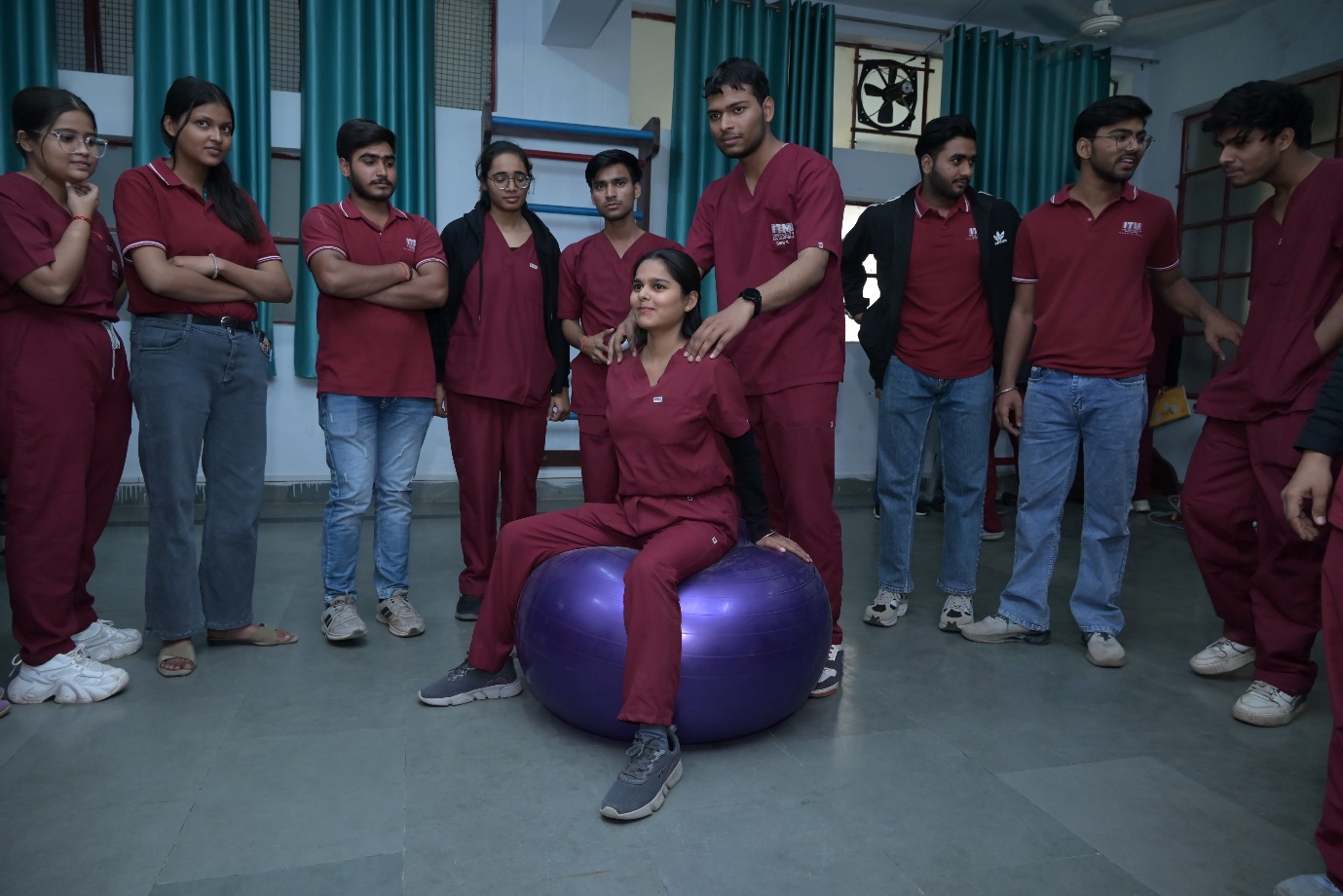
Healthcare Is a Profession
Unlike other fields healthcare is a profession that directly affects peoples lives. Every action
you take as a healthcare professional can have an impact on someones life.
A laboratory technician has to follow procedures when handling samples. A radiologist has to know
how to use imaging equipment. A physiotherapist has to know how to work with patients who are
recovering from injuries. An operation theatre technician has to understand protocols and
maintain standards.
These are not things that you can learn by reading about them. Healthcare professionals develop
confidence and competence through practice. The more experience you get during your education
the more prepared you will be for the responsibilities of your job.
Bridging the Gap Between Theory and Reality
Classroom education teaches you concepts and theories. Practical training shows you how those
concepts work in life.
For example you may learn about testing in your lectures. Actually performing laboratory
procedures
requires a lot of skills, such as handling equipment following safety protocols and managing
samples
correctly.
Similarly you may understand rehabilitation techniques in theory. Applying those techniques to
patients requires communication skills, observation skills, patience and good judgment.
Internships help bridge the gap between learning and professional practice. They help you turn
knowledge into skills.
Building Confidence Before Graduation
One of the challenges that new graduates face is confidence. Many students finish their education
with records but they feel nervous about entering the professional world.
This is completely normal. Healthcare settings can be intimidating at first. There are patients
to
care for equipment to operate and procedures to follow.
Practical training helps you overcome these fears gradually. By participating in internships and
clinical exposure programs you become familiar with hospital environments, expectations, patient
interactions, medical equipment and workplace communication.
As you become more familiar with these things your confidence grows. Students who get experience
during college often transition into roles more smoothly than those with limited exposure.
Developing Technical Skills
Modern healthcare relies heavily on technology. Healthcare professionals work with equipment,
software systems, diagnostic tools and laboratory instruments.
These technologies are constantly evolving. Students need to learn not how equipment works but
how to operate it safely and effectively.
Practical training provides opportunities to handle healthcare equipment learn operating
procedures understand troubleshooting techniques and follow safety standards.
Employers often prefer graduates who already have experience because they can adapt more quickly
to workplace requirements.
Learning Professional Communication
Healthcare is ultimately about people. Technical healthcare roles require strong communication
skills.
Professionals interact with patients, doctors, nurses, technicians, administrators and family
members. Strong communication improves care and workplace efficiency.
During internships students learn how to explain procedures listen ask relevant questions work
within multidisciplinary teams and communicate professionally.
These experiences teach lessons that're difficult to replicate in traditional classroom settings.
Understanding Patient Care
Many students enter healthcare because they want to help people. Internships allow them to
experience this purpose firsthand.
Patient care involves more than knowledge. Healthcare professionals often support people who're
anxious, injured, recovering, uncertain or vulnerable.
Working directly with patients helps students develop empathy, compassion, patience, emotional
intelligence and professional responsibility.
These qualities are essential for long-term success in healthcare careers.
Exposure to Real Healthcare Challenges
Textbooks present situations. Real healthcare environments are more dynamic.
Students encounter situations such as conditions, equipment challenges, time-sensitive
procedures,
emergency situations and complex medical cases.
Experiencing these realities helps students develop thinking and problem-solving skills. They
learn
how healthcare teams respond to challenges and maintain standards of care.
This exposure builds maturity.
Understanding Workplace Expectations
Many students are surprised by how different professional life is compared to student life.
Healthcare workplaces require discipline, punctuality, accountability, teamwork and professional
behavior.
Internships provide an introduction to these expectations. Students learn how healthcare
organizations operate and what employers expect from professionals.
This preparation often makes graduates more employable and workplace-ready.
Improving Career Clarity
Healthcare offers career paths. Sometimes students start their course without
understanding which
specialization interests them most.
Practical exposure can provide clarity. For example a student may initially be interested
in
diagnostics. Later discover a passion for rehabilitation services.
Internships help students explore areas before making long-term career decisions. This can
lead to
choices and greater career satisfaction.
Building Industry Connections
Networking is not just important in business and management. It is valuable in healthcare too.
Internships allow students to connect with doctors healthcare administrators, laboratory
professionals, clinical supervisors and industry experts.
These connections can provide mentorship, career guidance, references and future job
opportunities.
Many healthcare professionals receive their employment opportunities through relationships
developed
during internships and practical training programs.
Enhancing Employability
Employers increasingly seek graduates who can contribute from day one. While academic
qualifications
remain important practical experience often helps candidates stand out during recruitment.
Students with internship experience can demonstrate skills, workplace readiness, professional
behavior, practical understanding and industry exposure.
This combination of theory and experience often improves employability significantly. Healthcare
organizations candidates who require less adjustment and training after joining.
The Growing Importance of Practical Learning in Allied Healthcare
The demand for allied healthcare professionals* is growing across India.
Fields such as laboratory technology, radiology and imaging technology, physiotherapy, optometry,
operation theatre technology, emergency and trauma care and nutrition and dietetics are becoming
increasingly important within healthcare systems.
Because these professions involve interaction with technology, patients and clinical processes
training plays a particularly important role.
Students who gain exposure often develop stronger professional capabilities.
What Students Should Look for in a Healthcare College
When evaluating healthcare programs students should look beyond course names.
A strong healthcare education should include laboratories, clinical training opportunities,
hospital
exposure, internship programs, industry partnerships, experienced faculty and practical learning
modules.
The quality of training can significantly influence career outcomes. Students should carefully
evaluate how real-world exposure a program provides.
Practical Learning at ITM University Gwalior
For students in healthcare education practical learning opportunities are a consideration.
At ITM University Gwalior healthcare programs emphasize both understanding and hands-on
experience.
Students are encouraged to participate in laboratory training, clinical exposure, practical
projects, skill-development activities, internship opportunities and industry-oriented learning
experiences.
This approach helps students connect classroom concepts with healthcare environments.
By combining learning with application students can develop the confidence, technical skills and
professional competencies required in todays healthcare sector.
Preparing for the Future of Healthcare
Healthcare continues to evolve.
Advancements in technology, diagnostics, patient care systems, artificial intelligence and medical
equipment are transforming the industry.
Future healthcare professionals must be adaptable and capable of applying knowledge in real-world
situations.
Practical training helps students prepare for these changes by developing competence, professional
confidence, communication abilities, critical thinking and adaptability.
These qualities remain valuable regardless of how healthcare evolves.
 Leadership
 Recognitions
  What Gwalior Offers
 Infrastructure
 Eligibility Criteria
 Fee Structure (2025-26)
 Scholarship Policy
 Ph.D. Notifications

.png)